Anatoli Unitsky: “Creation of our own engineering school allowed us to produce a complex industry-leading product”
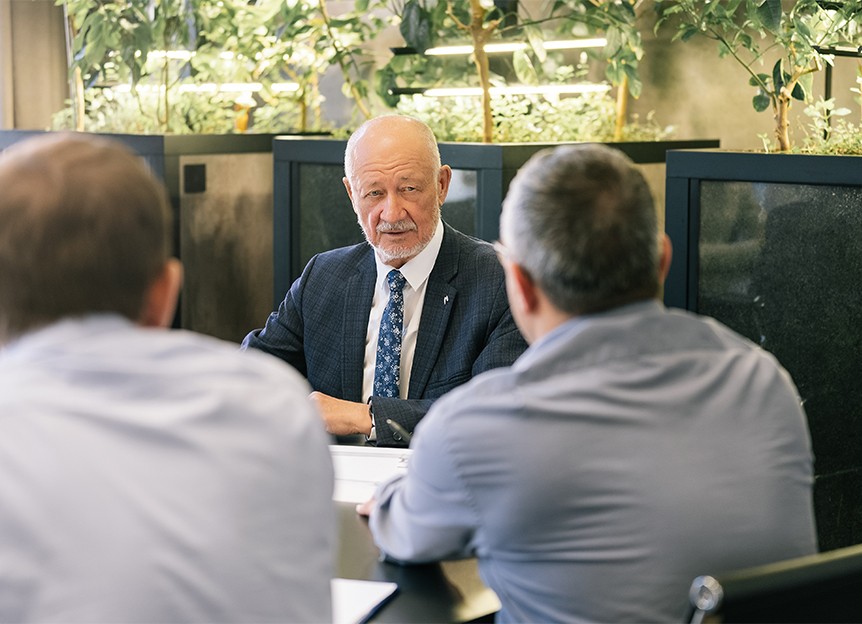
The General Designer of UST Inc. spoke about the development of the Unitsky Engineering School which currently and without the involvement of third-party companies creates environmentally friendly uST Transport and Infrastructure Complexes.
Becoming an engineer: the beginning
The history of my engineering school began about 50 years ago. One of my first and most favorite hobbies as a child was the independent designing of multi-stage rockets and their subsequent launch. It was the operating physical model of the spaceport that brought me the first certificate (and it happened precisely in the city of Zhezkazgan, which is next to the Baikonur spacecraft launching site), which I still consider one of the most important awards in my life.
In 1967, I entered Tyumen Industrial Institute at the “Motor roads” faculty, where I received a very good education despite Tyumen being a deep province at that time. After moving to Belarus and getting a job at the Gomel Road Construction Trust, I transferred to the correspondence department of the Belarusian Polytechnic Institute (my son was born, and I had to start working to feed my family). I graduated from BPI in 1973 with the qualification of a railway engineer. My graduation project “The Opsa — Drisvyaty Highway” became the best work at the faculty.
A few years later, after serving in the Soviet Army, I already worked as an engineer at the Institute of Mechanics of Metal-Polymer Systems of the BSSR’s Academy of Sciences. After 3 years, I became a leading engineer, and then the head of the patent and licensing service. At the Institute, I created more than 100 inventions, including those in collaboration with other researchers. About 30 of my inventions were introduced into the national economy of the USSR with a total economic effect of more than 100 million Soviet rubles with royalty payment that sometimes reached a maximum allowed by Soviet legislation (the limit was no more than 20 thousand rubles for one invention).
In 1982, in the then popular journals “Inventor and Innovator” and “Technology for Youth”, an engineering project of a global scale of my own development that is the General Planetary Vehicle (the GPV) was presented to the world. This space transport system is capable of delivering up to 10 million passengers and 10 million tons of cargo to near space in one flight. Optimizing the Planetary Vehicle, that should encircle the Earth along the equator, I began to simplify and reduce the cost of the runway of this giant geocosmic aircraft with a length of 40 thousand km and a mass of several tens of millions of tons. This is how I came up with the idea of string transport with a prestressed string rail transport overpass.
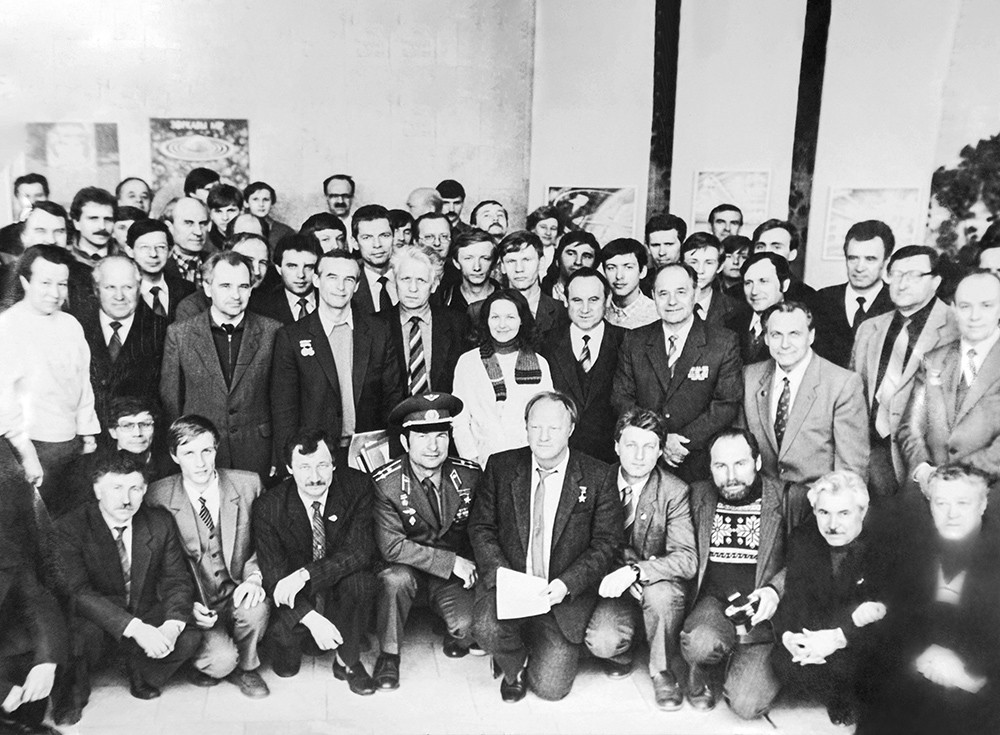
But I needed supporters to implement such a global project. In April 1988, with the support of the USSR Cosmonautics Federation and the Soviet Peace Foundation, I organized the First International Scientific and Technical Conference “Non-rocket Space Industrialization: problems, ideas, projects”, which brought together about 500 people from 20 countries, both republics of the USSR and foreign countries. Then I pointed out the inefficiency of modern cosmonautics and proposed my own alternative for delivering passengers and cargo to near space. At the event, it was decided to create a “Star World” center for the scientific and technical creativity of young people in the city of Gomel, intended for the development and practical implementation of my inventions. I became the director of the center, and a year after its creation we managed to conclude more than 100 contracts for scientific and technical developments.
While working in Star World, I for the first time presented the EcoSpace program of my own development. Its main goal is to save our planet’s biosphere from the oppression of the industrial technosphere with the help of geocosmic non-rocket transport systems. To do this, it is necessary to take the harmful Earth industry into the near space and shift the world economy to biosphere technologies, having highly efficient transport based on string rail structures technology as their prime mover. At the same time, I began working on my first monograph “String Transport Systems: on Earth and in Space”, which was published in 1995.
A string transport project
After the collapse of the Soviet Union, I continued my hard work on the development of the GPV and string transport projects; the latter were supposed to be the first stage of the EcoSpace program implementation.
In 1998, my project for a test section of the string transport system received a UN grant. In 2001, an operating test site was created in the city of Ozery near Moscow, where the first run of a test string track took place — it was a “changed” to steel wheels ZIL-131 truck driving along string rails. This way I was able to successfully confirm my engineering calculations in practice.
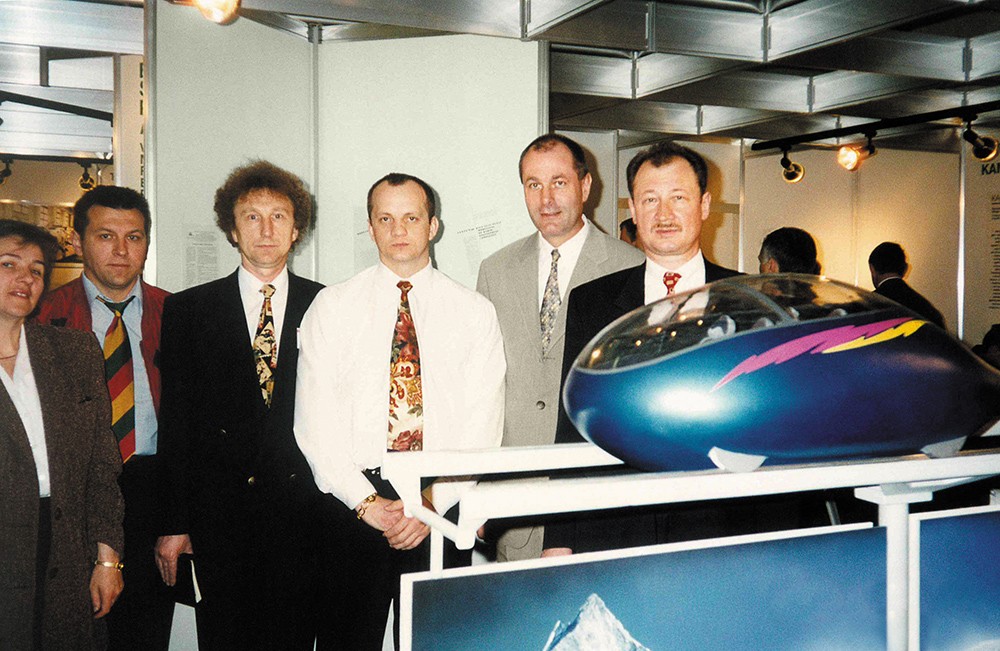
In 2002, I was awarded a second UN grant, and after an international examination that was carried out, string transport received recommendations for practical application in the international transport services market. A few years later, our transport was presented to the President and the Government of the Russian Federation at a meeting of the Presidium of the State Council for Innovations in Transport held in the city of Ulyanovsk, and received a positive assessment. However, the financing of the project at the state level never happened.
UST Inc. as continued development of the Unitsky Engineering School
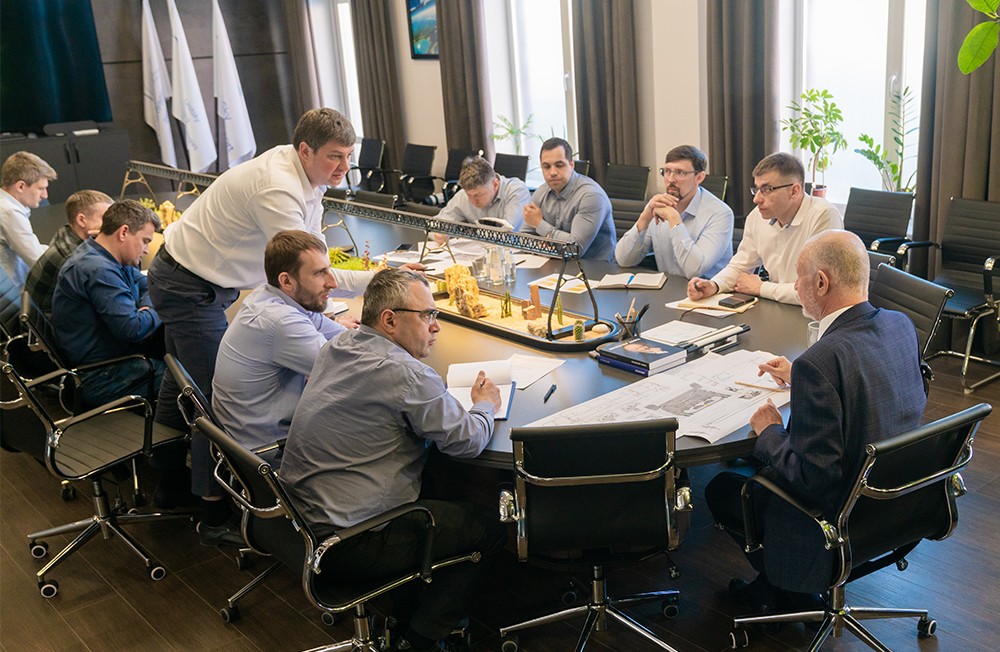
In 2015, I created the engineering company Unitsky String Technologies Inc. (UST Inc.) in Belarus. At the same time, the construction of a test site named EcoTechnoPark began near Minsk in the city of Maryina Gorka. A year after the company was founded, we presented the first industrial samples of rolling stock at the InnoTrans International Exhibition in Berlin. In the same year, the EcoTechnoPark conducted the first running tests of one of the string transport models — a uBike, the unmanned electric rail vehicle on steel wheels.
2 years after the formation of Unitsky String Technologies Inc. we opened our own SW Plant production complex. The technological base of our own creation and the world-class machine park allows us to perform the most complex work from the production of rolling stock to the manufacture of motor wheels, energy storage devices, components of the string rail overpass, and other string transport units. Thus, absolutely all elements of uST Transport and Infrastructure Complexes are developed and created exclusively within the Unitsky Group of Companies without the involvement of third-party technologies, productions, and personnel.
In 2019, a wide range of rolling stock was developed and several types of different tracks were built under my leadership at the test site in Maryina Gorka. At the same time, work began on the construction of the uSky Test and Certification Center (Sharjah, United Arab Emirates).
It is worth noting that the period until 2021 wasn’t just about creating a commercial transport and infrastructure product ready to enter the world market. During that time, I’ve gathered a team of the best specialists in my industry — about 1000 engineers, constructors, designers, researchers, economists, builders, and production workers of several dozen specialties. The team was not just assembled, but also retrained for a fundamentally new direction of civilizational development that are string technologies.
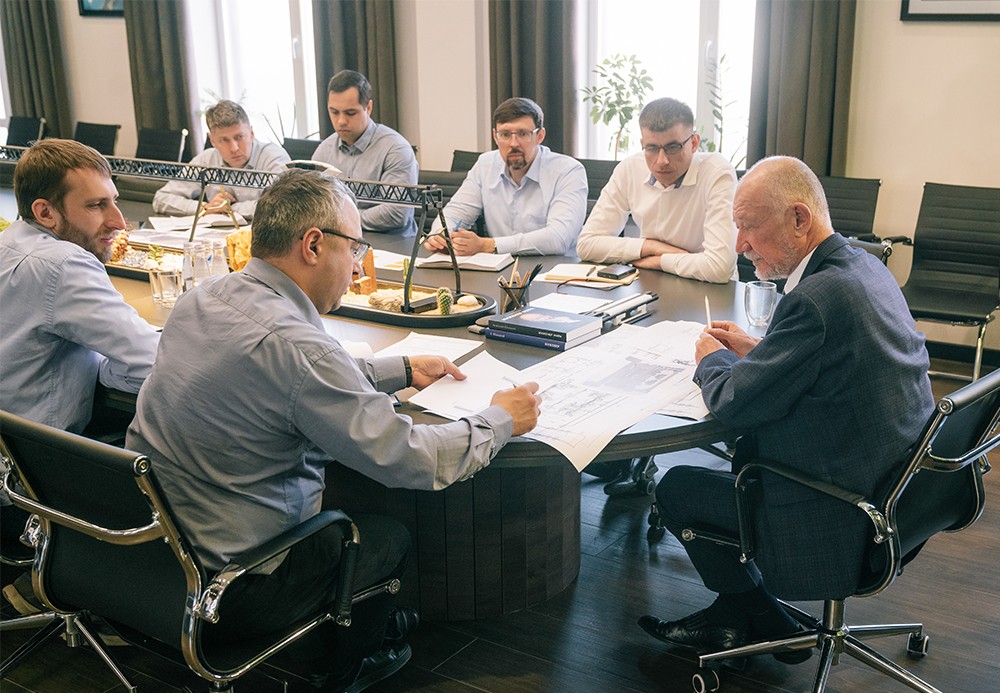
All these people became followers of the Unitsky Engineering School, which embodies scientific, design, engineering, and production areas. Today, the Group of Companies has more than 60 design offices, departments, and laboratories. For example, our Design Engineering Department alone, in fact, has already grown to the level of a large design institute. Such a team allows Unitsky Group of Companies to fully control all engineering stages from design and development to production, testing, and operation. And now, looking back, I can definitely say that the creation of the Unitsky Engineering School was one of my main decisions and achievements, which allowed us to independently, from scratch, maintain and develop a very complex industry-forming product that has no analogues in the world.
Over the years, we have not only created all the necessary systems, subsystems, and elements of uST Transport and Infrastructure Complexes, but also tested and certified them. At the moment, we have designed, manufactured, and tested 15 fundamentally different uPods in cargo, urban passenger, and intercity high-speed versions, both mounted and suspended. Several more uPods are at the design and development stage.
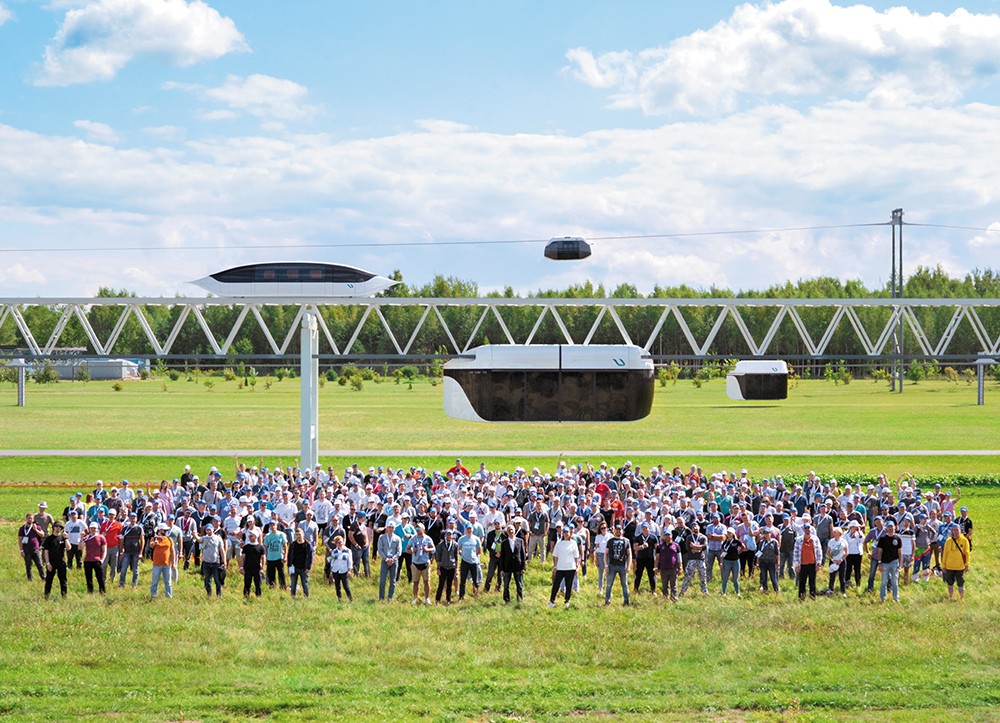
5 various transport and infrastructure complexes with hinged and suspended string rail overpasses of flexible, semi-flexible, semi-rigid, and rigid types are already erected on the territory of EcoTechnoPark, while two more are currently under construction. A uLight, the delicate light transport and infrastructure complex and the first commercial project that is already put into operation, has also been completed in Maryina Gorka. It’s a promising development of our company.
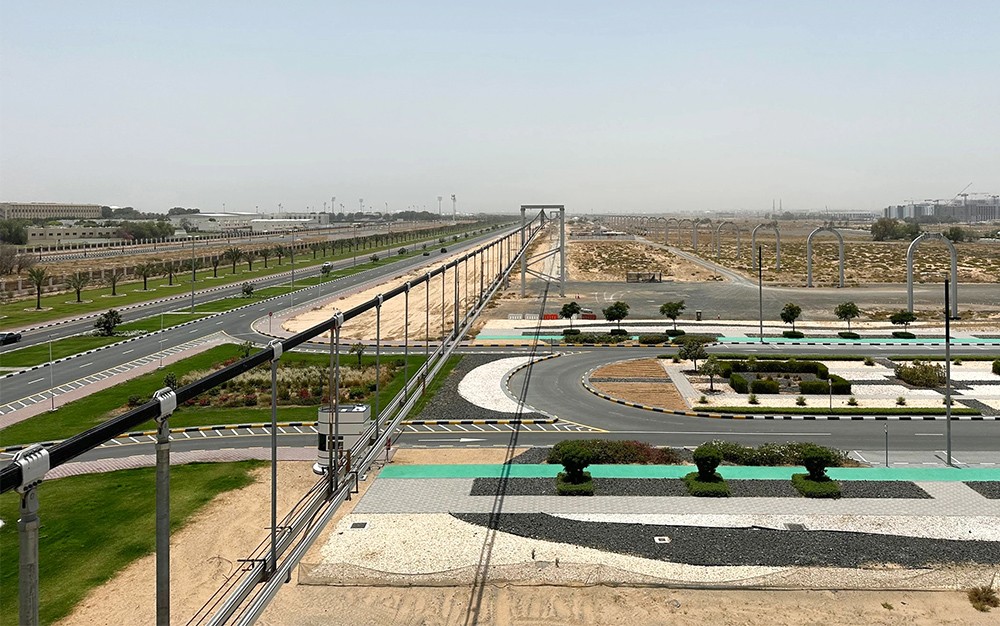
Two uST сomplexes in tropical design are erected at the uSky Test and Certification Center in Sharjah. Test section No. 1, including rolling stock, infrastructure, and a string rail overpass with a length of more than 500 m (including passenger and service stations along with unstressed sections), in 2021 was certified as a transport and infrastructure complex according to international standards.
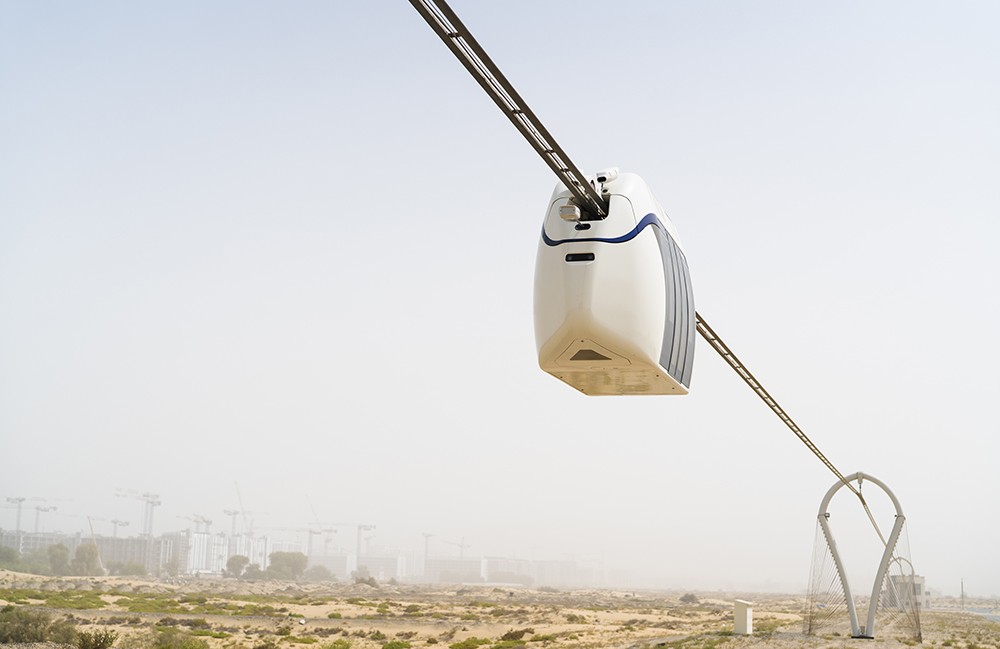
The construction of another test section with a transport overpass of more than 2.5 km in length, which will allow passenger and cargo transportation at speeds up to 150 km/h has also been completed. By the way, during the construction of this section, we carried out a unique job that has no analogues in the world — an entire prestressed track structure weighing 350 tons and more than 2 km long was raised to a 15-meter height. The heavy-duty string rail overpass is designed for the movement of our new flagship model of UST Inc. — a fifth-generation 25-seat uBus U4-212-01, which uses the best innovative solutions. The uBus has already been delivered to Sharjah and will soon be put into operation.
In 2022, our parent engineering company received the status of a scientific organization along with academic research institutes of the National Academy of Sciences of Belarus. This indicates a high scientific level of design work carried out by scientists and engineers of Unitsky String Technologies Inc.