Anatoli Unitsky Presented a New Scientific Collection on Non-Rocket Space Exploration Technologies
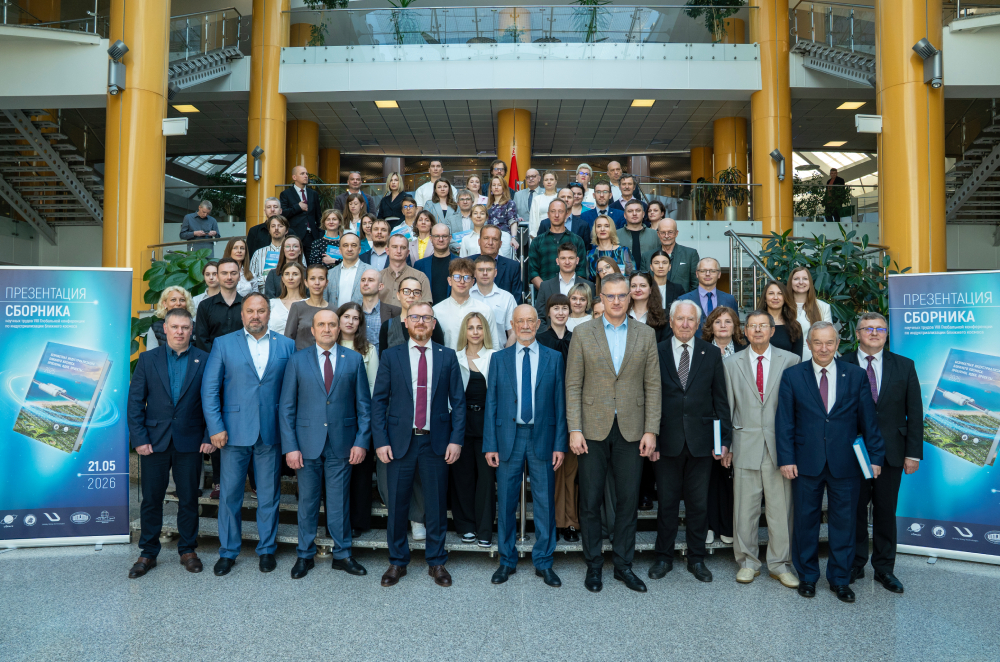
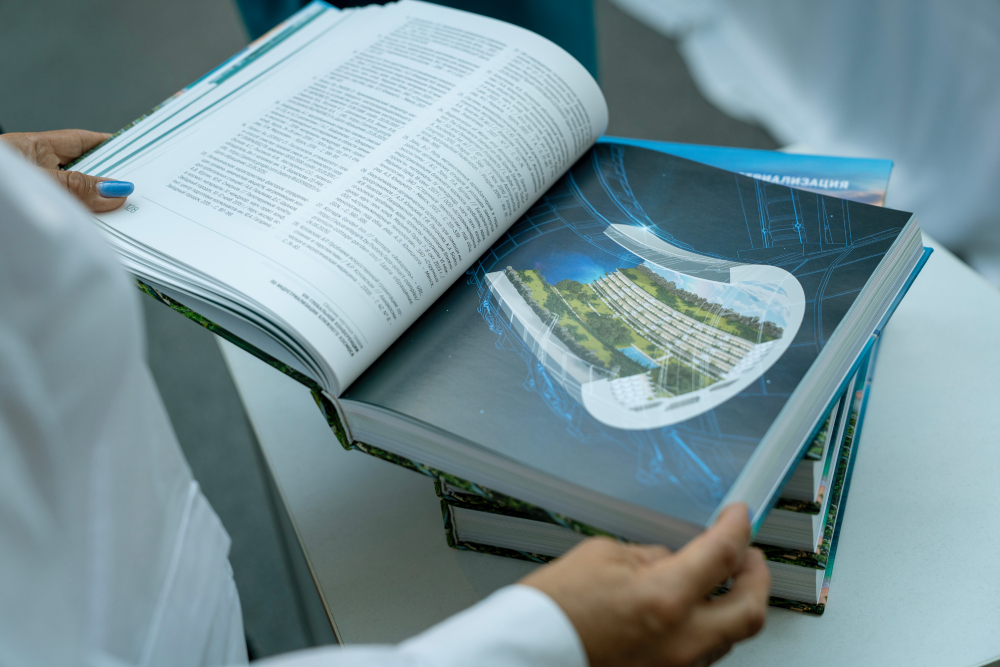
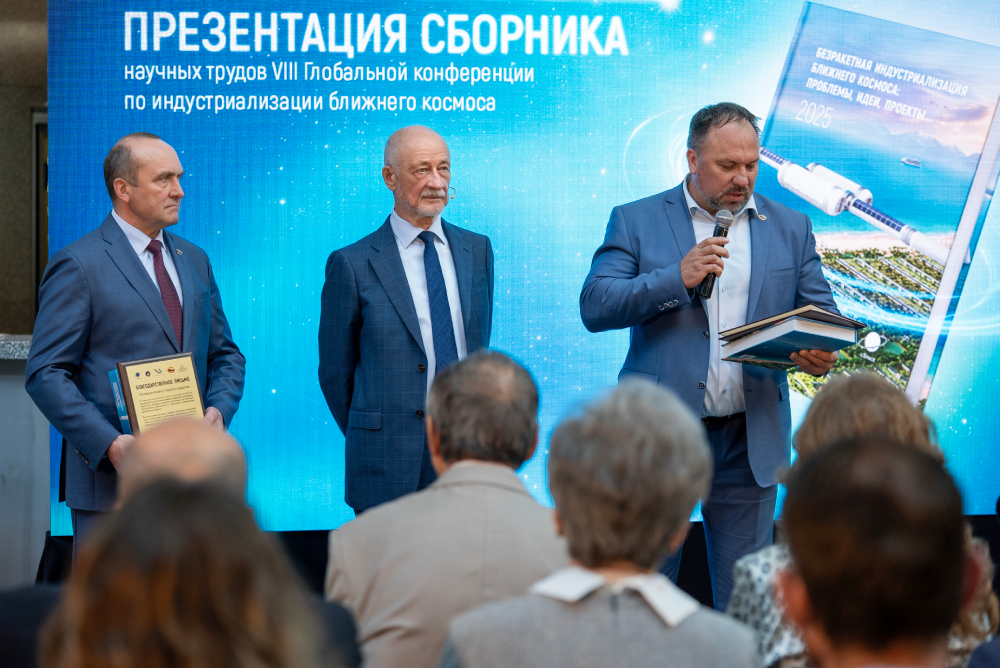
A presentation of the scientific proceedings from the VIII Global Conference on Non-Rocket Near Space Industrialization was held at the National Library of Belarus. The publication includes 44 scientific articles.
The event was attended by representatives of the National Academy of Sciences of Belarus, the Union State, directors of the state leading libraries, engineers and scientists, as well as specialists in space research.


The collection materials cover key areas related to the implementation of the uSpace program: space industrialization and construction, energy and information technologies, and development of closed-loop ecosystems and biosphere solutions for human life beyond Earth.
The central place in the publication belongs to the General Planetary Vehicle (GPV) project, developed by Belarusian engineer Anatoli Unitsky. The GPV will be capable of delivering up to 10 million tons of cargo and 10 million passengers into near-Earth space in a single trip, using electric energy instead of chemical fuel. This approach will not only enable efficient near-space industrialization but also reduce the environmental burden on the planet.
During the presentation of the collection, Anatoli Unitsky emphasized that every launch of a traditional rocket leaves tons of toxic emissions in the atmosphere, accelerating the destruction of the ozone layer and polluting the environment. This is why he began searching for a safe alternative for space exploration while still in his youth.
“Today, this vision is no longer the dream of a lone engineer. We see how the GPV concept is becoming the subject of serious research, international discussions, and practical development. And our conference is one of the platforms where a new scientific school is being formed — where solutions are born that will determine the future, including the future of the space industry.”
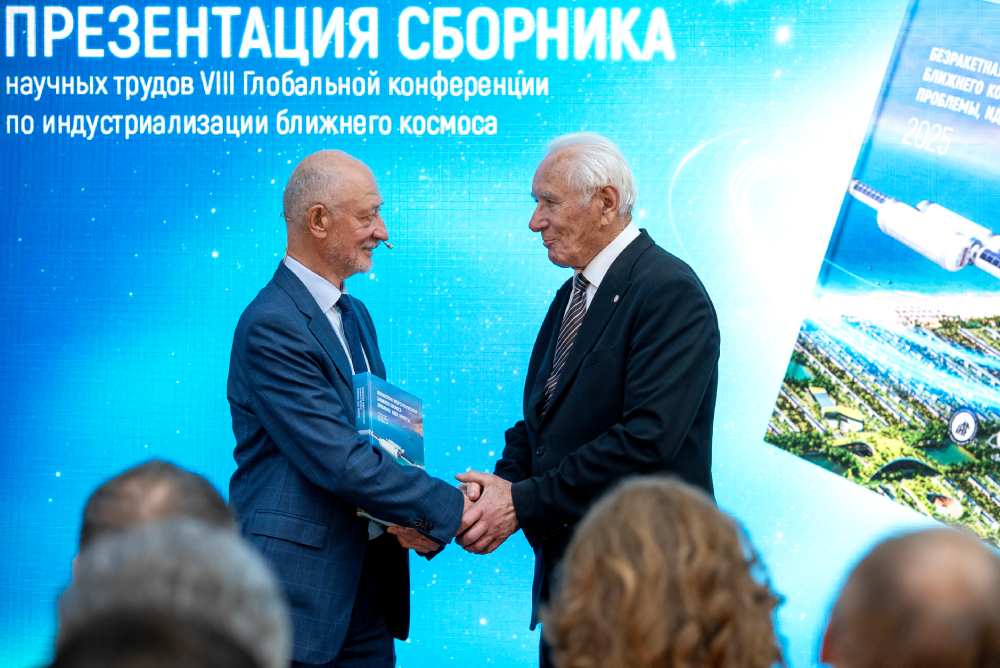
The number of scientific articles in the current collection is a record in the entire history of the conference, indicating growing interest in the non-rocket near space exploration program uSpace from the scientific and engineering community.
High praise for the developments came from Pyotr Vityaz, Academician of the National Academy of Sciences of Belarus.
“Today, what Unitsky proposes is a solvable task from the standpoint of economics, technology, and materials science. Under his leadership, significant progress has already been achieved in both technical and technological development. In addition, considerable work has been done in the efficient use of limited space for growing food for humans.”
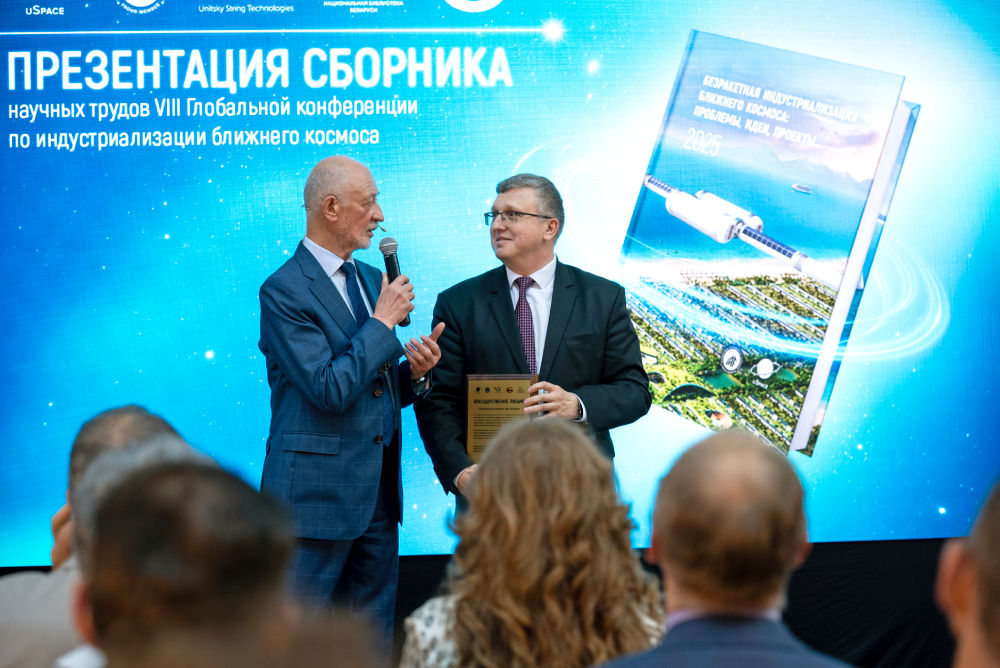
Alexander Shumilin, Academician-Secretary of the Department of Physics, Mathematics, and Informatics of the National Academy of Sciences of Belarus, also noted the serious potential of Anatoli Unitsky’s technologies.
“The technology of string transport is a truly global technology of the future. But many elements of this technology are already commercially viable and are being used in real industry today.”
The event attracted the attention of the media. Belarusian TV channel STV prepared a report on the presentation of the collection and the uSpace program.
The information and analytical portal of the Union State separately highlighted a greeting from Sergei Glazyev, State Secretary of the Union State, addressed to Anatoli Unitsky at the event. In his address, Sergei Glazyev emphasized that the development of the idea of near-space industrialization is generating increasing interest from the scientific community and state institutions of friendly countries.
“Thanks to your strategic vision, engineering courage, and ability to unite talented specialists around lofty goals, a unique international scientific and engineering school is being formed, focused on solving the challenges of the future.”
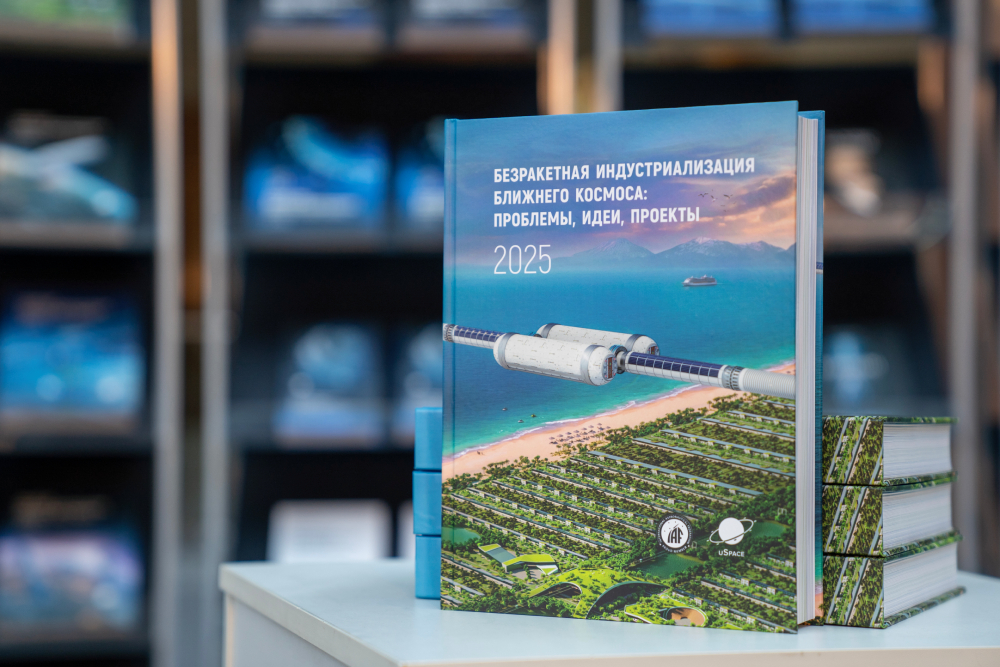
To date, seven scientific collections have been published and held in the world’s largest book depositories: the Apostolic Library of the Vatican, the Russian State Library, the libraries of the Academies of Sciences of Russia, Poland, the National Libraries of Azerbaijan, the Czech Republic, and Bulgaria, as well as university libraries in the USA, the United Arab Emirates, and other countries.

The first copies of the new collection have already been transferred to the Presidential Library of Belarus, the National Library, and the libraries of the state leading universities. The electronic version of the collection of proceedings from the VIII Global Conference on Non-Rocket Near Space Industrialization is available at the link.
The IX Global Conference on Non-Rocket Near Space Industrialization will be held in Belarus on September 11–12, 2026. Detailed information about the event and participation terms is available on the organizer’s website.