Anatoli Unitsky Presented String Transport to Participants of the International Space Research Council
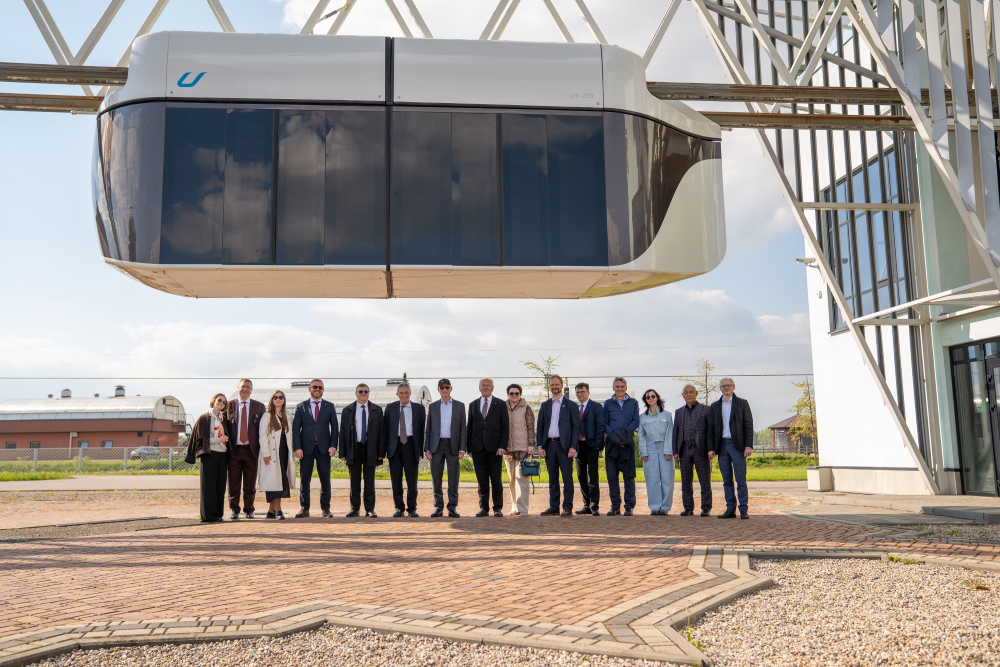
Members of the Space Research Council of the International Association of Academies of Sciences became acquainted with the developments of the General Designer of UST Inc.
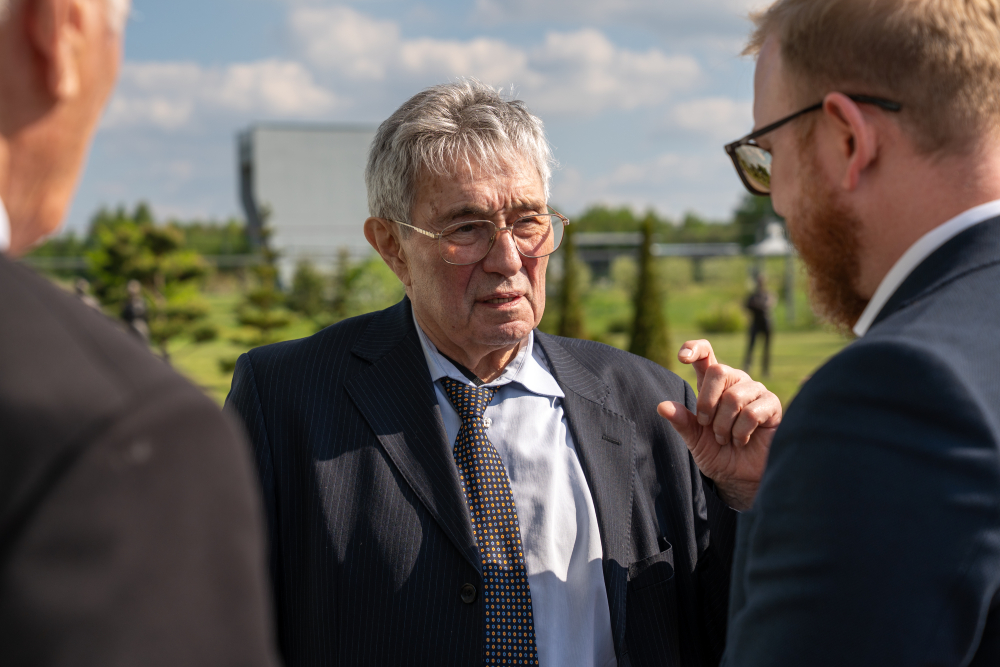
Leading scientists from Russia, Belarus, and Kyrgyzstan specializing in space research visited the Unitsky String Technologies Inc.’s Demonstration and Test Center — the EcoTechnoPark. Anatoli Unitsky personally introduced the guests to the uST technology and also presented the uSpace non-rocket near space exploration program, along with biosphere-oriented solutions aimed at environmental preservation.
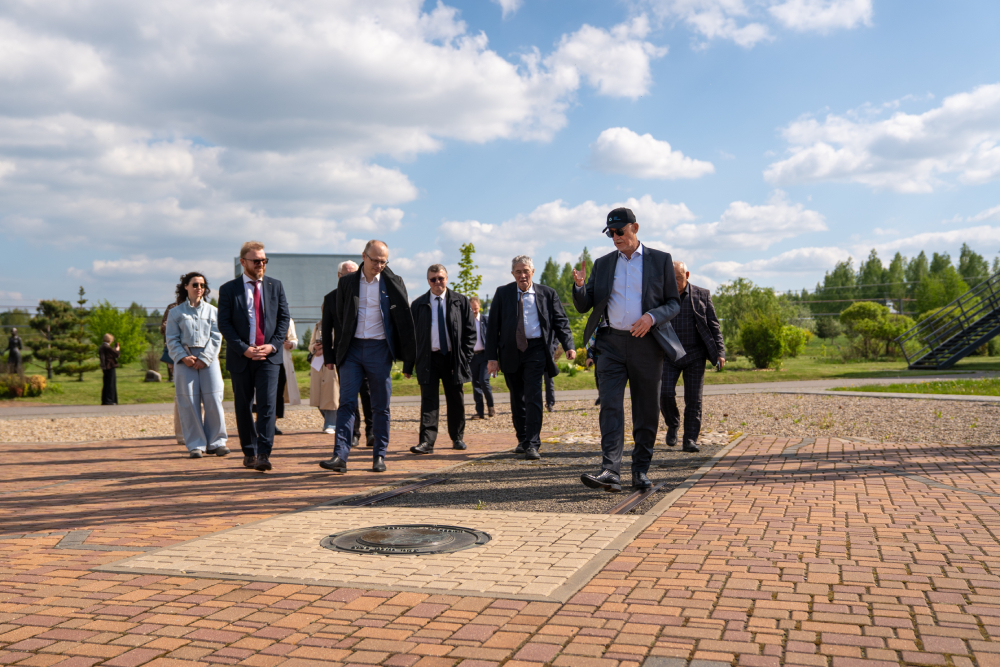
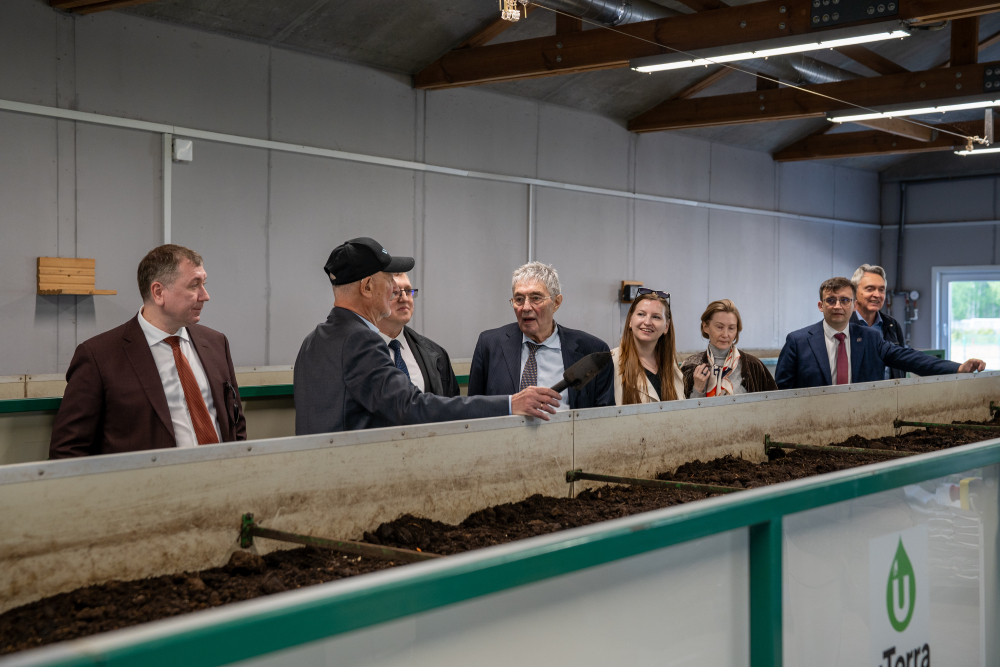
The delegates arrived in Minsk to participate in a meeting of the Space Research Council of the International Association of Academies of Sciences, held at the National Academy of Sciences of Belarus. Representatives of Anatoli Unitsky’s engineering school also took part in the council’s work. Following the official program, the guests visited the string transport testing complex.
Among the delegation members were Pyotr Vityaz, Academician of the National Academy of Sciences of Belarus; Alexander Shumilin, Academician-Secretary of the Department of Physics, Mathematics and Informatics of the National Academy of Sciences of Belarus; Lev Zelyonyi, Scientific Director of the Space Research Institute of the Russian Academy of Sciences and Academician of the Russian Academy of Sciences; Alexander Blagov, Vice President of the National Research Centre “Kurchatov Institute”; and Kubanychbek Zhumaliev, Academician of the National Academy of Sciences of the Kyrgyz Republic.
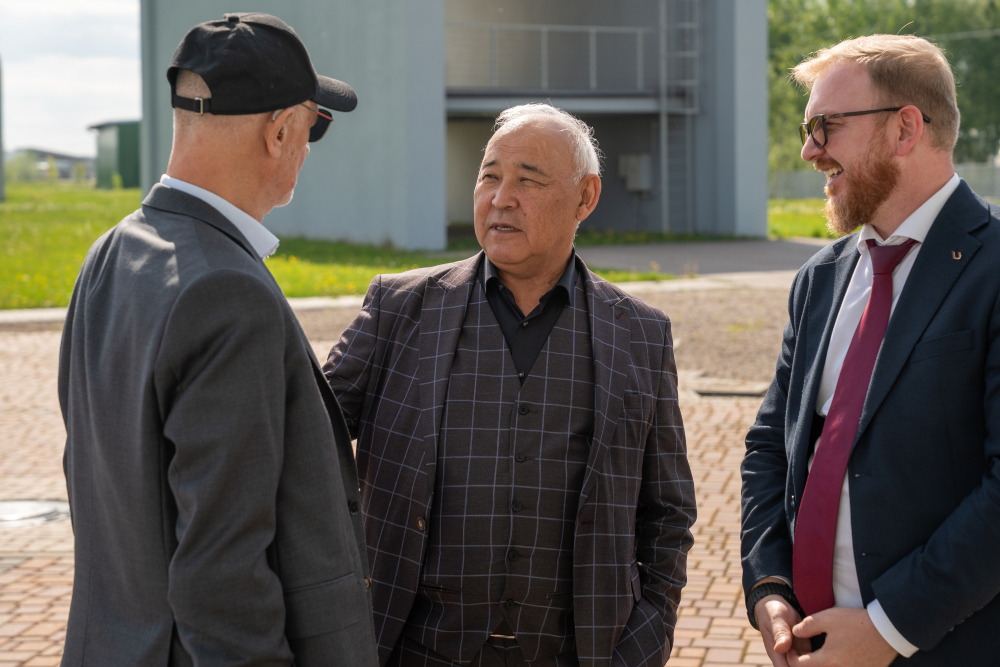
During the visit, the scientists discussed the prospects for space exploration and existing approaches to its implementation, as well as the structural limitations that reduce the efficiency of current projects, including traditional rockets and the concept of the space elevator. Particular attention was paid to the environmental impact of rocket launches, which release large amounts of toxic combustion products, soot, and chlorine-containing compounds into the atmosphere, accelerating ozone layer depletion and polluting the environment.
Against this backdrop, the uSpace non-rocket space exploration program offers an alternative approach capable of addressing many of these challenges. The concept envisions delivering up to 10 million tons of cargo and 10 million passengers into orbit in a single trip using the General Planetary Vehicle developed by Anatoli Unitsky.
Oleg Korablev, Chief Research Scientist at the Space Research Institute of the Russian Academy of Sciences, emphasized that humanity must continue searching for new paths of technological and industrial progress:
“Visionaries such as Mr. Anatoli are extremely important. I truly believe this is a form of dedication and selfless commitment. Just look at the EcoTechnoPark — ten years ago this land was in poor condition, and today it is a beautiful, well-maintained space that benefits people and brings them joy. I deeply appreciate the drive for change, the search for new approaches, and the aspiration to move at least part of industry beyond Earth. It is a noble cause.”
During the meeting, Anatoli Unitsky stressed that the development of space technologies is impossible without a comprehensive rethinking of transportation and industrial infrastructure:
“Humanity has reached a point where further progress requires new engineering solutions and a more responsible attitude toward the planet. The uSpace non-rocket near space exploration program is part of a systemic approach in which space is viewed as an environment for the development of all human civilization. The implementation of such a large-scale project is impossible without close cooperation between the engineering and scientific communities.”
.jpg)
The visit confirmed the strong interest of the academic community in biosphere technologies. Scientists highlighted the potential of string transport for megacities and intercity transportation, while the General Planetary Vehicle project was recognized as a promising approach to non-rocket near-Earth space exploration.
At the conclusion of the meeting, the delegates agreed to continue cooperation and were invited to attend the IX Global Conference on Near Space Industrialization, which will take place in Belarus on September 11–12, 2026.