String Rail Overpasses for Various Types of Terrain
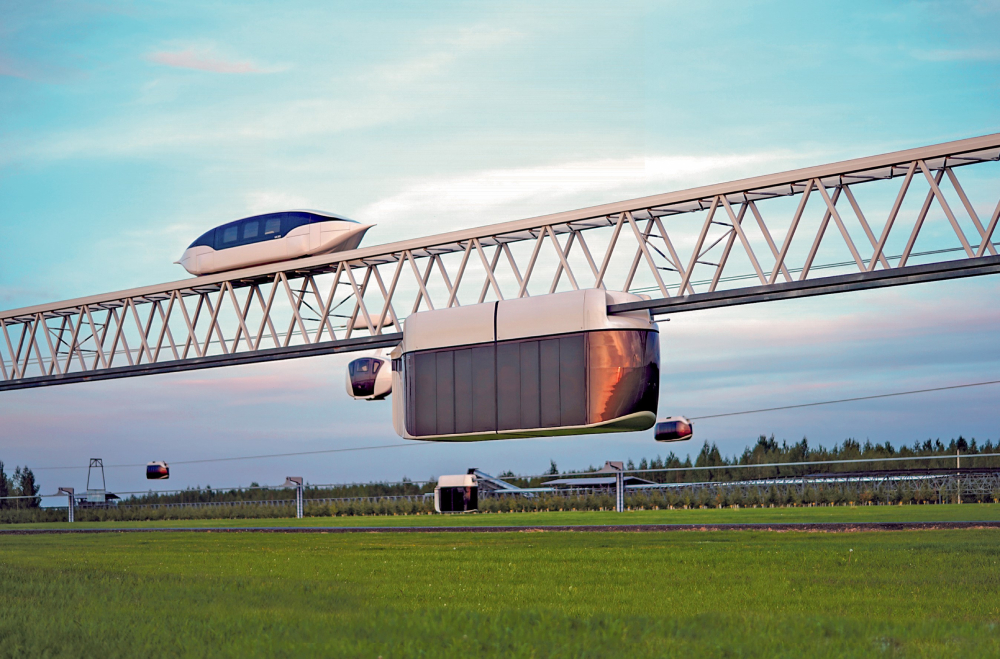
A research article by Anatoli Unitsky and colleagues from UST Inc. has been published in the proceedings of the 1st International Scientific Conference “Modern Building Structures, Materials, and Technologies.” The paper examines the types of uST overpasses and their application in various conditions.
Modern transport systems require a combination of high travel speeds, cost-effective construction, and versatility. uST transport and infrastructure complexes provide an effective solution to these challenges; they consist of a string rail overpass, unmanned electric vehicles on steel wheels, an automated control system, as well as aboveground stations and terminals.
Specialists at Unitsky String Technologies Inc. have developed several track structure options that allow uST complexes to be adapted to various operating conditions.
In this research paper, the authors examined four main types of string rail overpasses, which differ in design and area of application:
● Rigid — designed for urban and high-speed transport, allowing speeds of up to 500 km/h;
● Semi-rigid — combines high load-bearing capacity with ease of assembly and reduced construction time;
● Semi-flexible — ensures a more uniform load distribution and smoother motion;
● Flexible — characterized by low material consumption, suitable for establishing transportation links in areas with complex terrain.
The study concluded that the variety of uST structural solutions allows for selecting the optimal type of track structure depending on the terrain, the required speed, and traffic volumes.
In addition, specific solutions developed for uST transport infrastructure complexes can be applied in the construction of bridges, tunnels, and other engineering structures.
The full version of the scientific publication is available at the link.